Make Your Own Receipts
Track your workouts, stay motivated, and get the gains you want.
Hello and welcome to another episode in the series “Do you want muscles like C. L. Clark?” You can get the brief there, and check out the other post in this series, “Take Up Space.” I’ve also posted about different programs you can try. This post is about the best way to achieve what you set out to achieve: paying attention.
Make your own receipts. Incremental changes over a period of time. If you want proof it’s working, you have to keep it yourself. It’ll also keep you honest. Biggest failure mode? We’re not honest with ourselves and expect we’re entitled to what we want when we want it.
The numbers you write down in the notebook don’t lie. If you haven’t increased your reps or upped your weights, you’ll be able to see it. It’s the first place you should go if you feel like your fitness or physique has stagnated. This isn’t to say you should get trapped in a capitalism-esque hunger for constant increases—but regular increases, yes. Alternating cycles of stress and recovery, you’re body will adapt by getting stronger (read: greater work capacity, i.e. fitter).
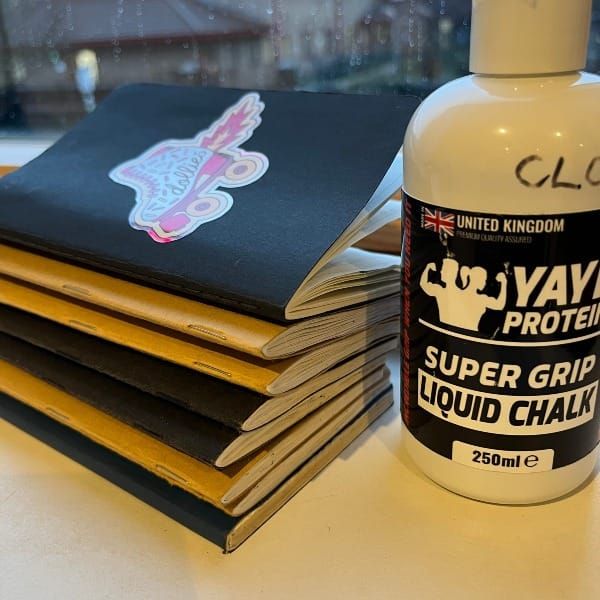
Tracking your workouts in a notebook (or an app, I guess, but there’s something thrilling about the tactility of a notebook and I like being untethered from my phone, which I also use as a timer) is also great for motivation.
If your body doesn’t look like you want it to look yet or you don’t feel stronger, the numbers in the notebook can reassure you that gains are indeed gaining. They give you proof to show to the demons trying to mess with your head game (which is the most important part, remember?).
In the two pages below, you can see where I started rep-wise at the beginning of a program (Kettlebell Maximorum) and at the end of that same program. I used one or two 16kg KBs the entire program, so one variable remained the same. So did the time: snatch workouts were always 20 minutes and Clean/Press/Front Squat workouts were always 30 minutes.
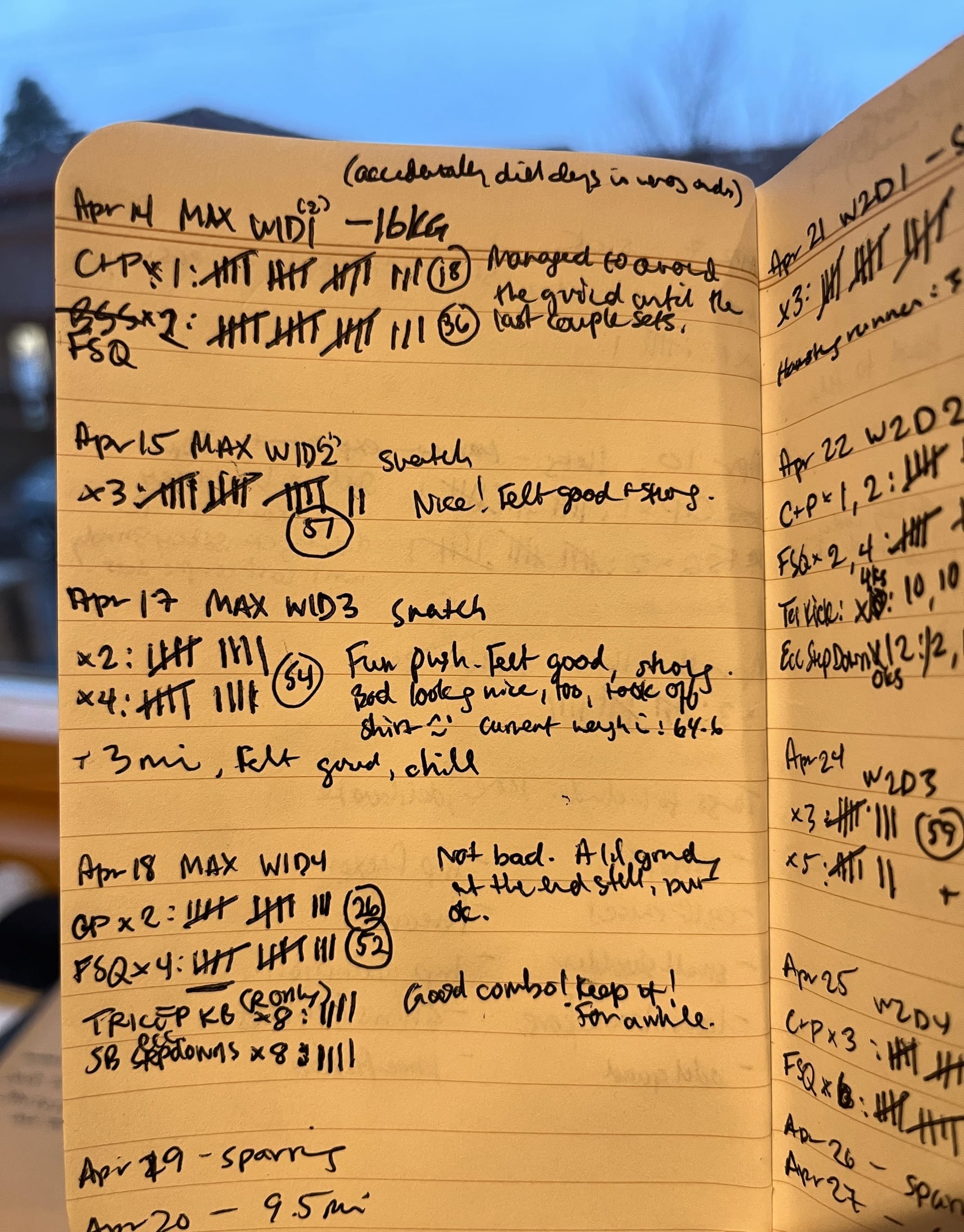
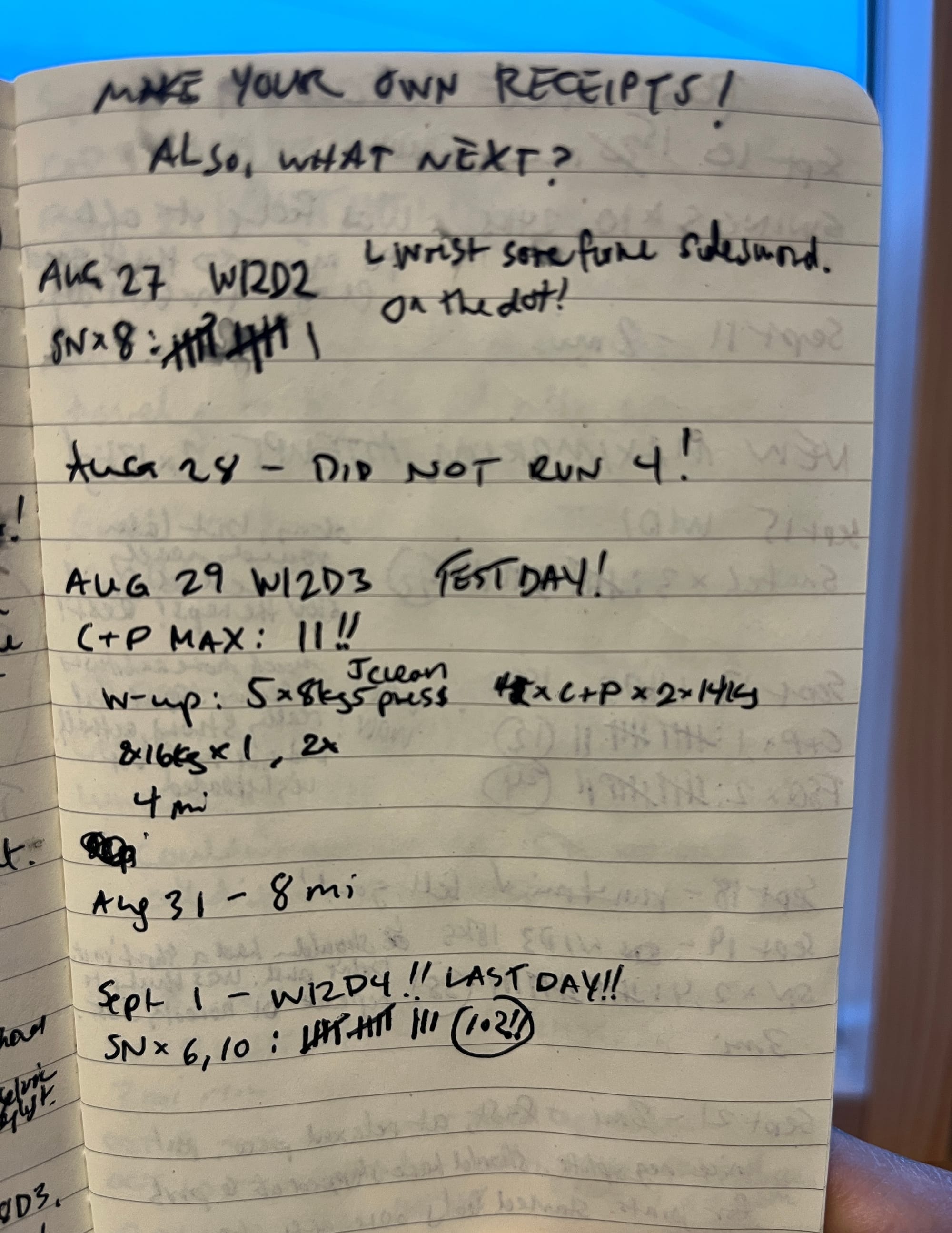
beginning of a cycle of KB Maximorum vs end of the cycle. please admire the sweat stains. the first page is right before my first sword tournament; the last page, right before my 25k fell run.
That meant all of the progression came from amount of work I could do in an amount of time. (That meant that I was working on density training, essentially.) I only had to keep track of one thing: did the amount of reps I did per workout trend generally upward? Absolutely.
And I do say generally—not every workout was upward. Depending on how I felt re: life and fatigue, sometimes the numbers stayed the same or even went down. But that’s okay and even necessary.
[NB: This program is billed as a 12 week program. April to August is more than 12 weeks, the clever among you might be thinking. However, the cleverer will know that it doesn’t matter how quickly you burn through a program if you apply it consistently. Instead of doing it 4x/week, I dropped down to 3x/week, letting the next day trail down to the next week and so on. This gave me room to run as well, and still maintain an appropriate level of recovery. Additionally, I made some adjustments for traveling, and rather than jump right in where I would have been, I redid the last un-modified week. I would rather go backwards on the program than jump forward and hurt myself. There simply is no rush. It will not make a difference if I finish the program at the beginning of July or the end of August. The important part is that I put all the work in consistently.]
You can also see the qualitative comments. My notebooks are filled with “good job!”s and “felt strong!” and “X hurts” (usually “R shoulder” or “L knee” 🙃). Part of this is motivation—that reminder to myself, again, that I am doing good for myself, and that I’m getting better at it. A reminder to be proud of what I’m doing, no matter how fast the progress goes.
It’s also good to understand how a certain workout made me feel, so that I can better gauge how to go into the next workout, or a similar one. If I write “wrecked, died, saw god” after doing 500 snatches, maybe I should think twice before attempting that same workout without vastly improved fitness. If I manage a certain rep/weight scheme and come out of it feeling good, then I know I can push a little harder next time.
I also point out fueling around the workout, as that can tell a lot. If I do something fasted and bonk? Welp.
The rest of it is diagnostic. Given my joint issues, I like to know that I have a record of when something starts pinging for the first time. It’s good to show to doctors and also good to keep track of how long I need to rest something—or if something is stressed for the first time, I’ll remember to keep an eye on it.
It’s also nice to note if you’re trying something new! Then you can say, “z presses are weird wtf i have a weak core” or “i love sandbag over the shoulders.” That can tell you a lot—what you might need to program into more of your workouts. (So can the diagnostic pain comments—a lot of knee pain? Better get on those wall sits.)
The takeaway?
- Get yourself some sort of tracking situation. A notebook, probably. I’ve also used Google Sheets at various intervals, depending on my workouts. I don’t find that a lot of the apps do weight training very well (e.g. Garmin) because they are a bit rigid. Notebooks are not.
- These little notes don’t have to be exhaustive or take loads of time. A few words, a few ticks.
- Make your system work for you. Tallies, whole numbers, abbreviations only you and your cat know. If you see my tally marks up there but you prefer to write yours differently—well, duh, do it. We’re different people. There is no gym-notebook-police. And if there were, ACAB.
- The notebook is here to train patience and consistency. There is no other way to achieve anything worthwhile. This is about working out and this is not about working out.
- Don’t be afraid to cheerlead yourself. Despite the fact that I’m putting mine online for the world to see, no one else has to see these. It’s not cringe to love yourself and be excited about progress. Cynicism is the number one thing that holds us back in our endeavors. Maybe I made that stat up, but it feels true.
Okay. Get out there and get those gains.
Stay sharp,
C. L.
Thanks for reading. If you like these ad-free, AI-less posts, please consider supporting my work by becoming a paid subscriber, dropping a tip in the tip jar, or buying a book for a friend.