Hello, fellow denizens of the deep shelves!
I came across the following tweet not to long ago:
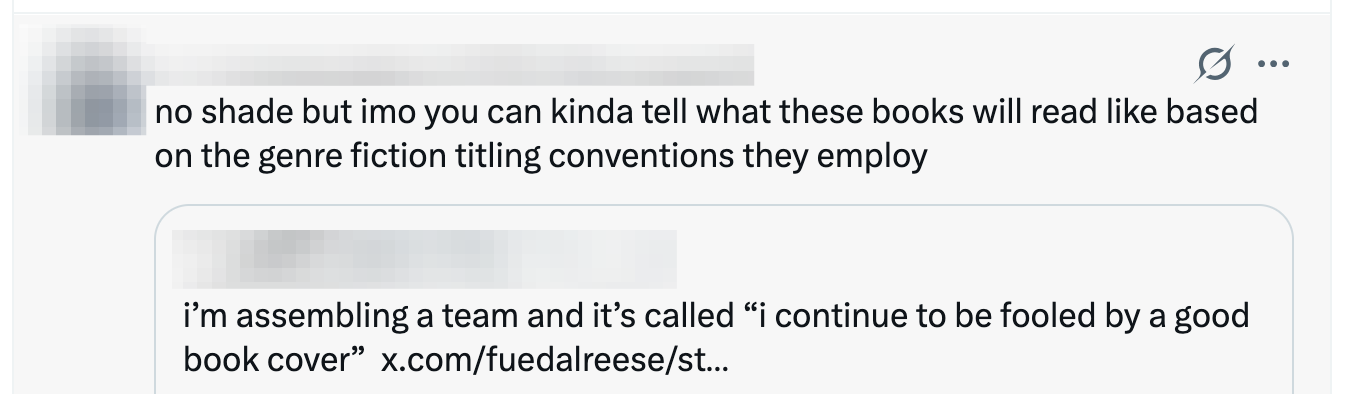
The author of the tweet says “no shade” but we all know what that means.
I don’t care. I’m not here to pass judgement on any of the books in question. But I do want to say…
That’s the point.
The titles are SUPPOSED to tell you what the book will read like. We—and by we, I mean the combination of author/editor/publisher, each with varying amounts of power—think about the title in relation to where it will sit in the market. We call it positioning.
Some authors love titling or have very strong opinions about titles (me 🙋♂️). In fact, I pride myself on the fact that my last few book titles were not changed by the publishing team. That’s a combination of me understanding where we want to position these books—epic fantasy, artsy novella, second or third in a trilogy with an established title pattern—and choosing evocative words that establish the tone of the work, the themes, and offer extra layer for the characters.
The Unbroken went through many titles, and I’ll admit that I was worried as the conversation went on. First, the first working title, which was tongue-in-cheek, riffing on the Game of Thrones style—The Sand and Fire Chronicles. I submitted the book to agents and editors under “Sands of Qatal.” Closer to publication, I was thinking, “By Force and Arms” (from the colonial law, Vi et Armis, which is also a banging cologne I have that belongs to Touraine, if you’re wondering—remind me one day and I’ll do a character cologne breakdown). That title, while cool and thematic, is admittedly a bit too literary, but I thought it shouldn’t matter too much since we were still in the era of the six-word titles like A Blank of Blank and Blank-Blank or A Blank so Blank and Blanky.
The publisher wanted to signify in some way that there would be magic involved, but I balked at that, since magic literally does not happen until the end of the book. False messaging, to me, would have been worse. I also didn’t want the title to feel too generic fantasy. Fast forward to the end, and we got “magic” into the series title, “Magic of the Lost,” and a short gut-punch one-word title—The Unbroken. It took a lot of back and forth, but eventually, everyone was happy.
So you see, these titles do have to run the gamut not just of the author’s precious vision and several iterations of workingtitle_1.doc, workingtitle_2.doc, stupidthing_final.doc., but also all the other professionals involved in the production process. And the goal of all those other professionals (and usually the author, too)? To sell the book.
To sell the book, you need to get it in front of the right people.
Once it’s in front of the right people, you need to make sure they realize that this is a book for them—which is to say, it has to speak the right language.
Everything on that cover is bent toward saying that. The title, the title font, and the cover image itself. Not just, “this is what the story is about”—that’s usually actually a very far bottom of priorities. The visual language is all about “this is what KIND of story.”
Seth Godin, an author of copious marketing books, often repeats this phrase as the main driver of the community building that drives products: “People like us do things like this.”
So in this case, “People like us read things like this.” That’s the goal with every book. To make the right people see this book, read this book, and think, “Ah! People like me read things like this.”
Does this lead to an annoying amount of repetition and copycats in titles and artwork? Boy, does it! And it’s not always the author’s fault/choice!
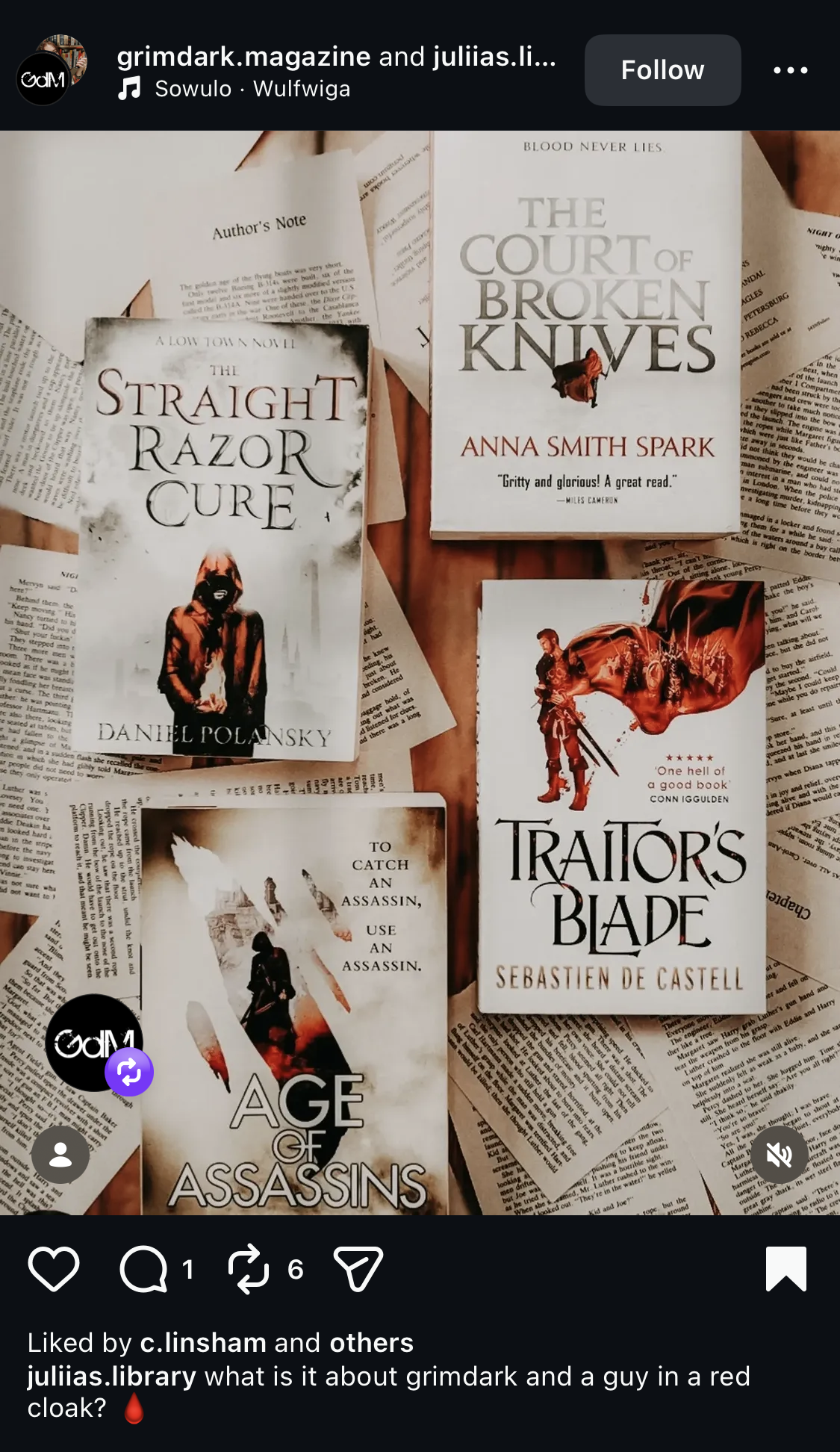
Which brings me to the other half of this post about genre conventions.
Not too long ago, an author brought up the point that people don’t expect Grimdark to be written by women or BIPOC, or to be behind pretty covers (i.e. pastels, brights, golds, and sprayed edges). While there certainly is a bias toward men, I do think the problem is not with the reader who glances at the book cover and says, ah, this must be a Romantasy. Because that’s the language we have established with the covers over time, just as we’ve established expectations with certain titles. (Joe Abercrombie’s book wasn’t called The Death of Hope and Heroes, after all—just The Heroes.)
The language of covers is created by expectation and repetition. X means this, so the next time I pick up X2, it will also be this.
So if a novel is Grimdark and has a title or a cover that doesn’t match the audience expectations, it might not find who its looking for. Cover copy is also important in expressing that language.
When we were figuring out how to present The Unbroken to the world, my editor and I were on the same page. She said she was thinking “man power pose” aka a solitary man à la Prince of Thorns (Mark Lawrence) or Promise of Blood (Brian McClellan), only make it a woman—in this case, Touraine. So even our comps were Grimdark books. Similarly, our color palette was darker, muted. We made concentrated strides to point this book to others we thought it would be like—what we wanted readers to associate it with. (Also, we were hunting for the lesbian gaze, which is always my personal goal, and yet another language to know.)
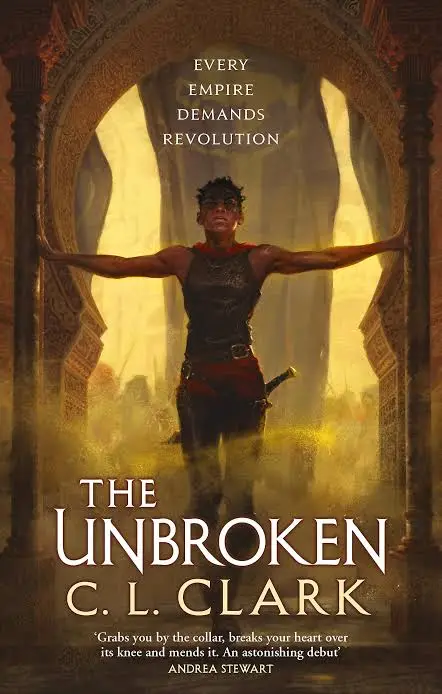
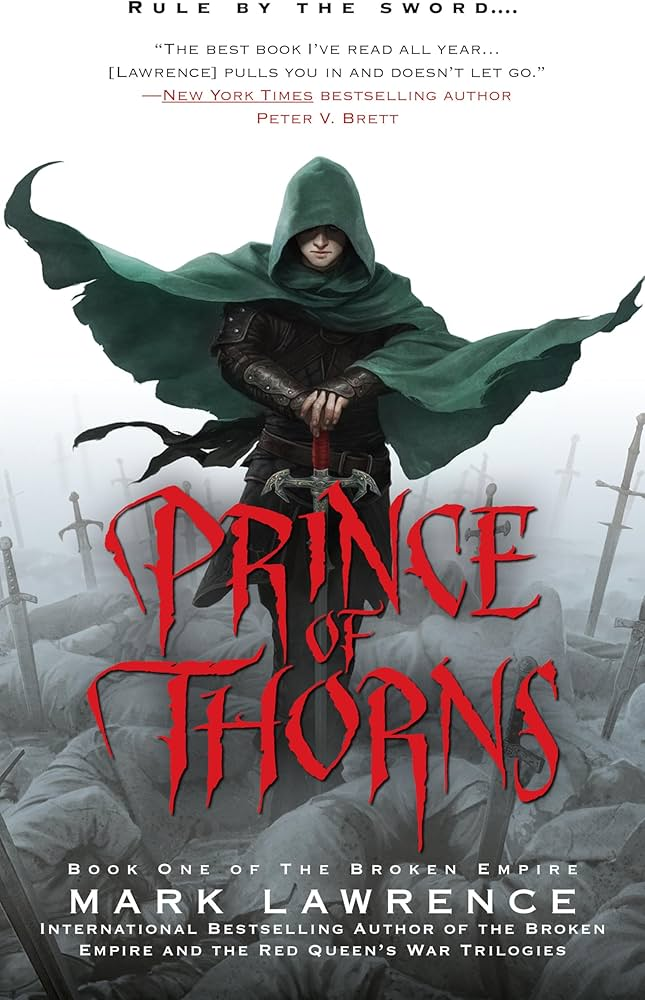
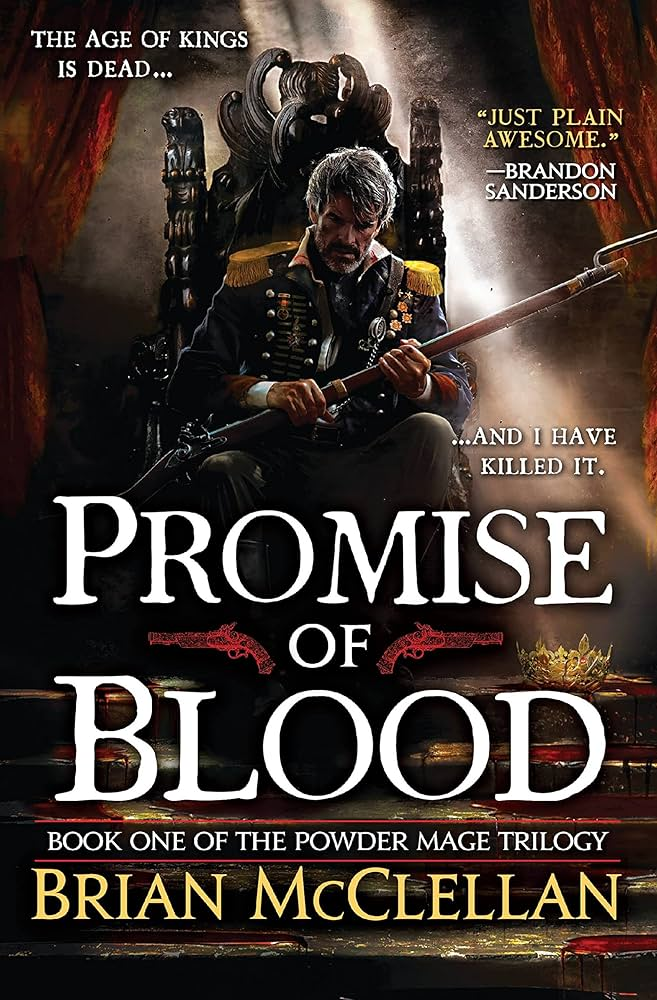
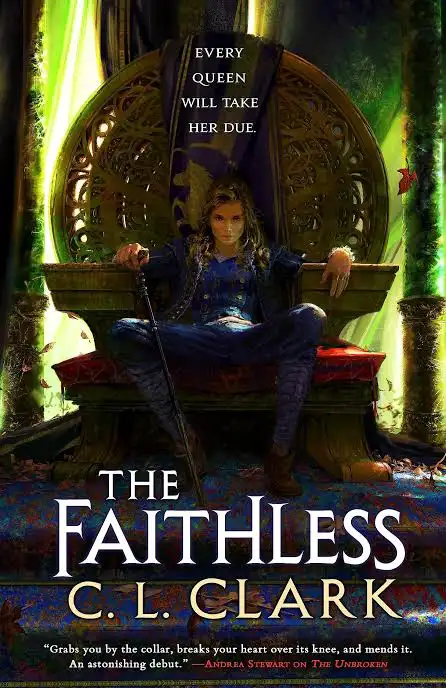
gender-swapped baddies
This was also before the Romantasy boom, so there was no one trying to emphasise the romance in the book or appeal to Romantasy TikTok, to women readers, with glitzy covers, to get that sweet, sweet Romantasy money (too small in the first book to be anything but a grave disappointment to Romantasy readers, anyway).
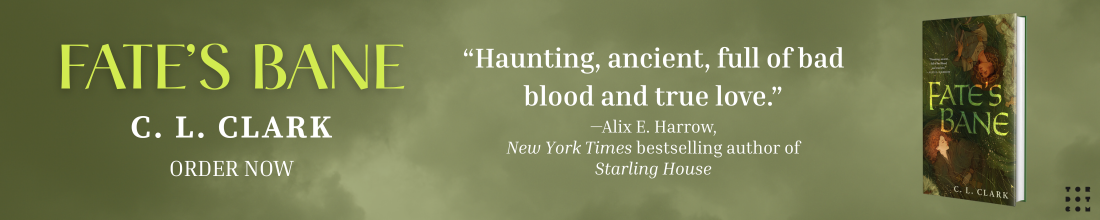
I made similar choices more recently with Fortune’s Wake which is being published by Grimdark Magazine. GdM focusing on…well, Grimdark, means readers are expecting a certain package. We aimed to deliver.
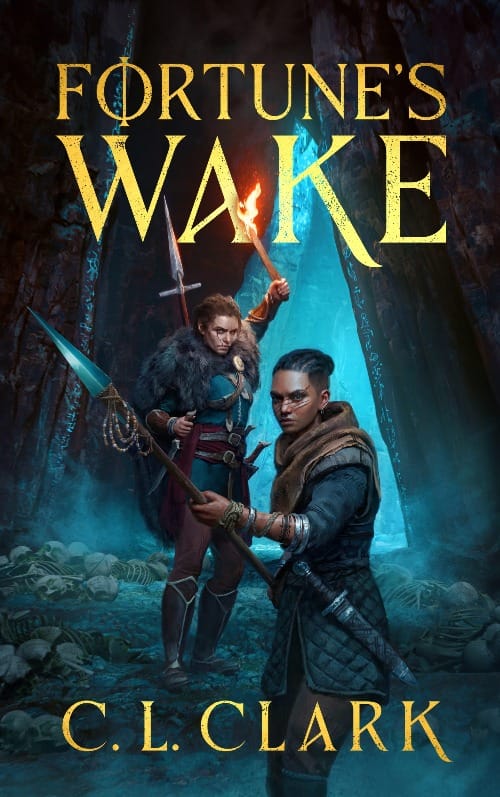
Few readers, I think, read The Unbroken and walk away thinking, ah, this was a Romantasy. (But some do! And they’re probably the majority of reviews that have questions about the romance!) I think few who see it on the shelf would pick it up and think that if they weren’t told by someone else or saw it categorized in that way on a bookstore table or someones bookstagram list.
I’m not a femme-presenting author, but I’ve definitely been put on Romantasy panels, and maybe that has something to do with being female. It may have something to do with the muddy waters of fantasy with a romantic throughline as majorly load-bearing in the plot automatically being read as Romantasy if written by a woman. It’s true that I’ve never seen a man put on a Romantasy list or table. But I’ve also been included on Grimdark Magazine’s list of Grimdark authors, so it’s not an exclusive Romantasy shelving, either.
I think that’s in large part thanks to the cover language. To the conventions of the (sub)genre. Knowing who I want to reach and why, and how to do that. (Grimdark Mag does have a post about Grimdark books hiding behind pastels, and mentions, similarly, how much of a surprise they are because the language doesn’t match, calling them “wolf in sheeps’ clothing.” If you want more on Grimdark and pretty diverse recommendations on where to start that you probably won’t find on bookstagram, and a definition that strives for more inclusion, they’re a great place to go.)
There are many layers to this conversation, including definitions of (sub)genres, auto-categorization of femme authors into genres (e.g. YA or Romantasy), but I think none of them can be had without discussing the positioning that happens before the book even comes out. (So authors, talk to your publishing teams about what you envision for your audience!)
Just for fun…what do you think The Unbroken cover would look like if it came out in the Romantasy era?
Until next time,
Stay sharp, my friends.
C. L.
alternate titles for this post:
- A Post so Grim and Sparkly/Shiny
- The Seven Deaths of the Author
Thanks for reading. If you like these ad-free, AI-less posts, please consider supporting my work by becoming a paid subscriber, dropping a tip in the tip jar, or buying a book or subscription for a friend.